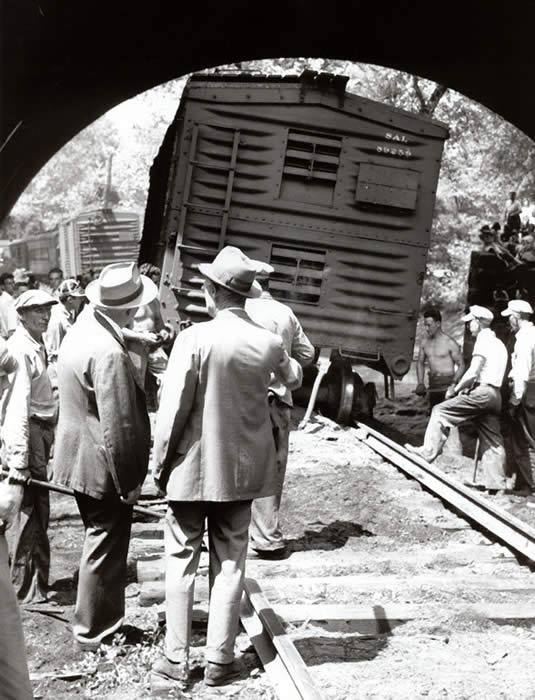
Ma and Pa Railroad
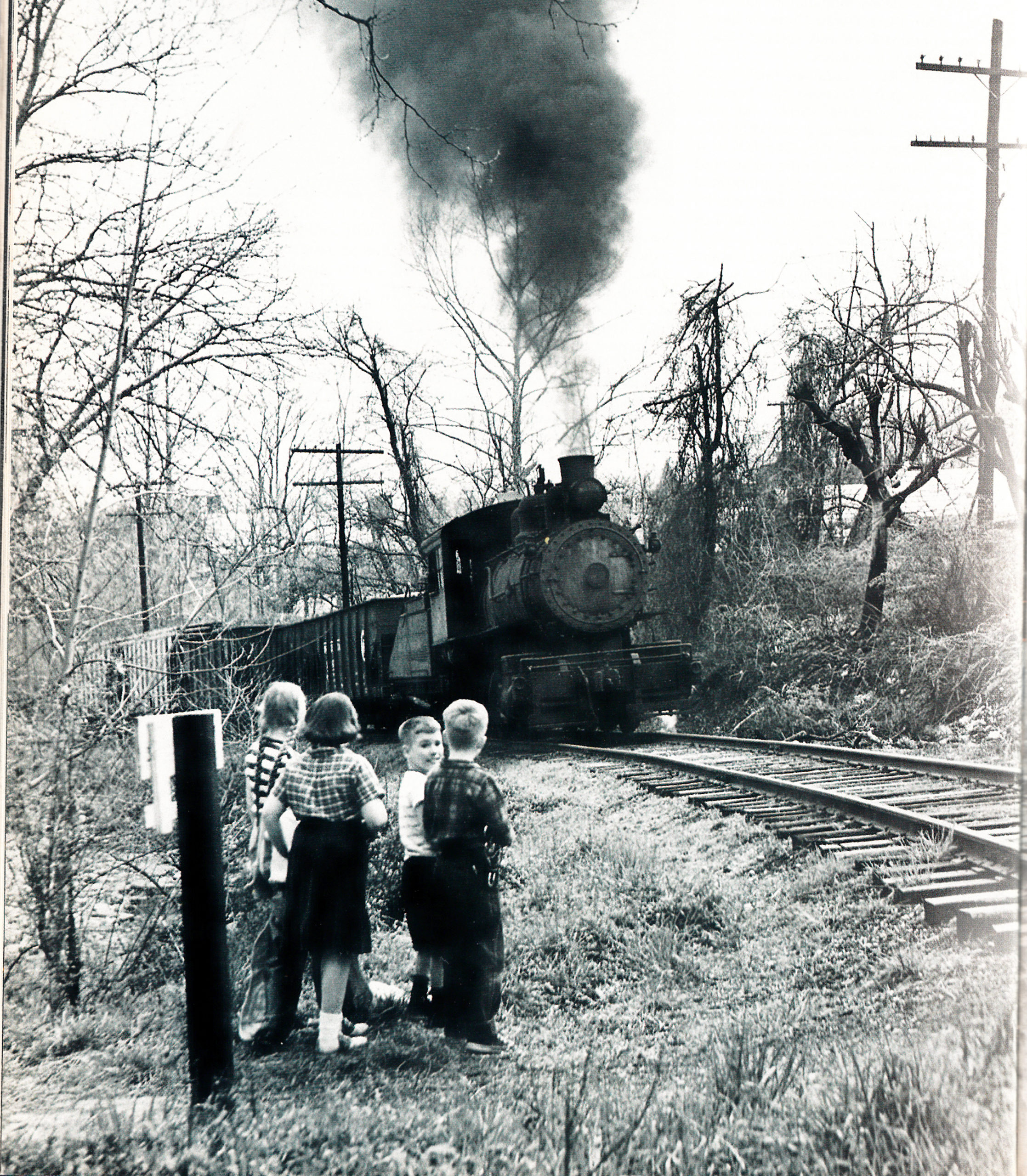 The railroad that became the Ma and Pa had a complicated history as a narrow gauge railroad beginning in 1882. The tracks were converted to standard gauge in 1901 and renamed the Maryland and Pennsylvania Railroad. The Maryland and Pennsylvania Railroad (the “Ma and Pa”), was an American short-line railroad between York and Hanover, Pennsylvania, operating passenger and freight trains on its original line between York and Baltimore, Maryland (North Avenue and Howard Street), from 1901 until the 1950s. It carried coal, farm products and passengers.
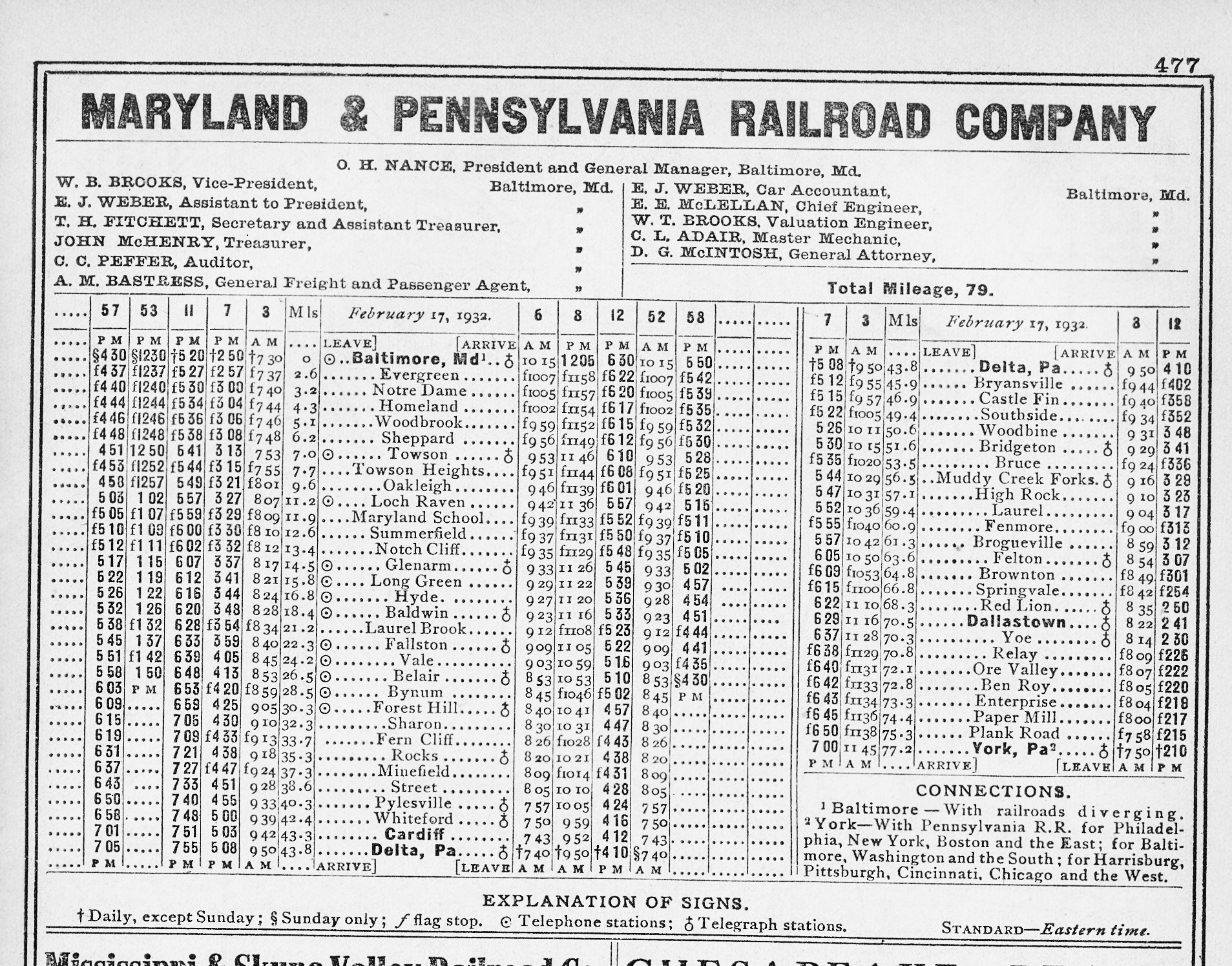
The Ma and Pa was popular with railfans in the 1930s and 1940s for its antique equipment and curving, picturesque right-of-way through the hills of rural Maryland and Pennsylvania. Reflecting its origin as the unintended product of the merger of two 19th-century narrow gauge railways, the meandering Ma and Pa line took 77.2 miles to connect Baltimore and York, although the two cities are only 45 miles apart in a straight line.
Passenger service was discontinued on August 31, 1954, and the section from Baltimore to Whiteford, Maryland (just south of the Mason-Dixon line demarcating the Pennsylvania-Maryland border) was abandoned in June 1958. Most of the remaining parts of the original railroad line were abandoned by 1984. The Maryland and Pennsylvania Railroad acquired a former 19-mile (31 km) Pennsylvania Railroad (PRR) branch line between York and Hanover in the 1980s, now operated by a successor corporation, York Railway.
Nineteenth Century
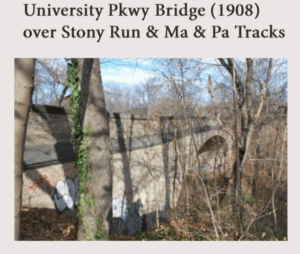
The Maryland and Pennsylvania Railroad was formed from two earlier 19th-century 3 ft (914 mm) narrow gauge railways: the Baltimore & Delta Railway, later the Baltimore and Lehigh Railway, and the York and Peach Bottom Railway, later the York Southern Railroad. Construction of the Baltimore & Delta Railway started in 1881, and passenger trains between Baltimore and Towson, Maryland, began on April 17, 1882. Later that year the company was merged into the Maryland Central Railroad. The line was extended northward to Bel Air, Maryland on June 21, 1883, and the following January, the line was completed to Delta, Pennsylvania.
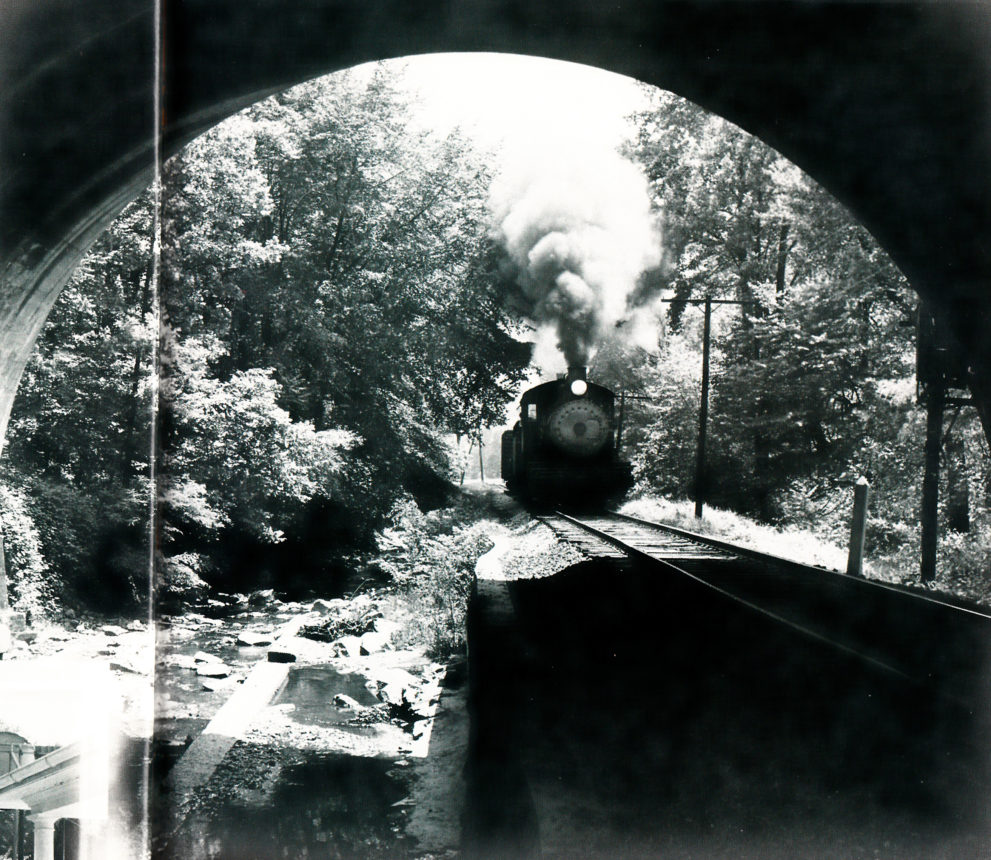
In Pennsylvania, the Peach Bottom Railway was incorporated in 1871. The railway’s Middle Division laid narrow gauge track between York and Red Lion by August 1874 and completed its line southward to Delta in 1876. It went bankrupt in 1881 and was reorganized as the York and Peach Bottom Railway (Y&PB) in 1882. The Y&PB merged with the Maryland Central Railway (successor to the Maryland Central RR) in 1891, becoming the Baltimore and Lehigh, and the new company operated trains on the combined track between York and Baltimore.
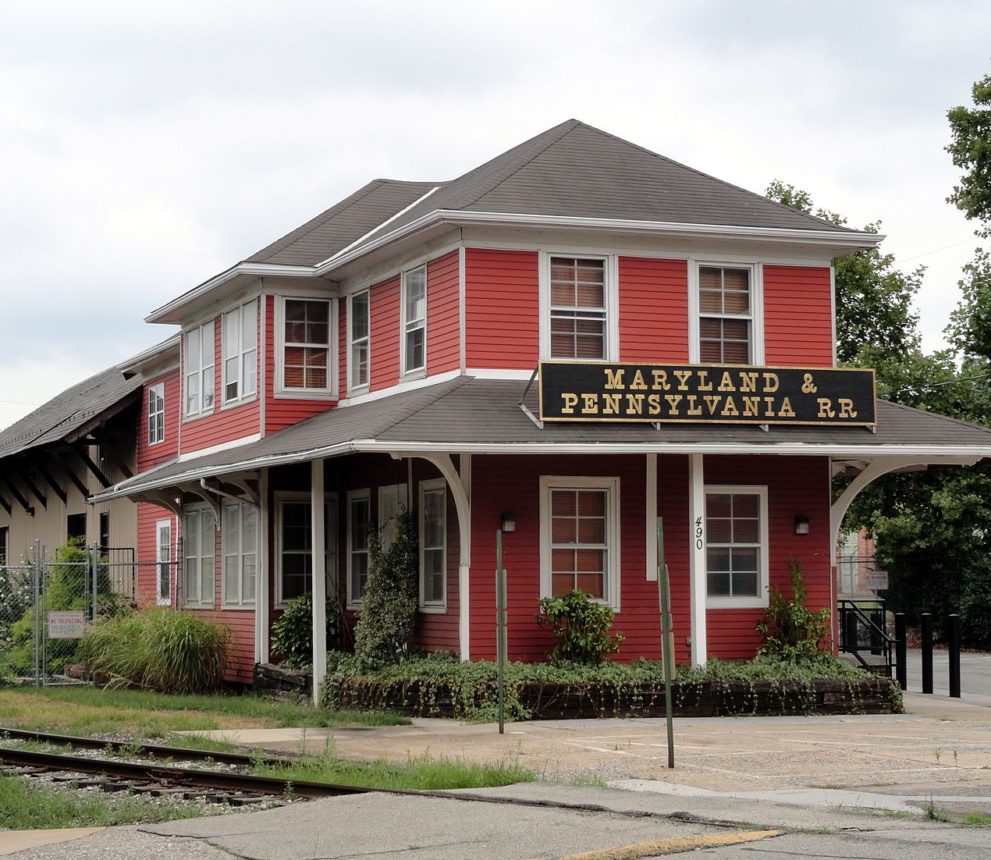
Both railroads struggled with light freight traffic and financial difficulties in the 1890s. Because of their narrow-gauge construction, the Baltimore and Lehigh Railway and York Southern Railroad could not interchange freight cars with other lines. The two companies finally converted to standard gauge between 1898–1900 and subsequently merged to form the Maryland and Pennsylvania Railroad on February 12, 1901. The result was the circuitous, 77.2-mile) “Ma and Pa” route between Baltimore and York, compared to the competing Pennsylvania Railroad’s more direct 56-mile (90 km) distance between the two cities on its Northern Central Railway division. The completed line had grades up to 2.3 percent and 55 sharp curves of 16–20 degrees (most mainline railroads seldom exceed six degrees, and even the former Denver and Rio Grande Western Railroad‘s mainline through the Rocky Mountains does not exceed 12 degrees).
Twentieth Century
Following the merger, the Ma and Pa operated through passenger and freight trains between York and Baltimore, as well as local trains at each end of the line, hauling mail and express, slate, marble, anthracite coal, lumber, furniture, and agricultural products to market. Particularly on the Pennsylvania Division (Delta–York), slate from Delta and manufactured goods from Red Lion and York were mainstays of the railroad’s outbound freight traffic in the early years. On the Maryland Division, inbound anthracite coal deliveries accounted for a significant volume of carloadings, along with milk from the many dairy farms in the area. One early morning train from Fallston boarded more than 1,100 gallons of milk daily and was dubbed the “Milky Way”. The line was profitable and traffic volume was such that additional locomotives were necessary.
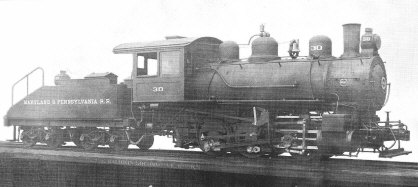
Baldwin 0-6-0 locomotive #30, built in 1913 and owned by the Ma & Pa until 1956, was typical of the line’s aged equipment.
The Ma and Pa acquired two 0-6-0 Baldwin switchers in 1913, #29 and #30 (pictured), called “jewels of engines, in some respects the most attractive the road had”, by writer George Hilton in The Ma & Pa – A History of the Maryland & Pennsylvania Railroad. The next year, three 2-8-0 “Consolidations” by Baldwin were added to the roster, providing more powerful locomotives for the Baltimore–York through freights. At its peak, the railroad had 16 locomotives and 160 pieces of rolling stock, with 573 employees.
With increasing competition from trucks and automobiles in the 1920s, passenger volume began to decline along with less-than-carload freight, such as milk from the many dairy farms along the Ma and Pa’s pastoral route. The Ma and Pa substituted more economical, self-propelled gas-electric passenger cars for steam-powered passenger trains in 1927–1928. Carload freight volume increased in the 1920s, however, as more industries located along the line, and earnings were strong enough for the company to declare dividends in 1930 and 193. The Ma and Pa’s relative prosperity ended with the economic downturn during the Great Depression, which cut the railroad’s gross revenues by half from 1932 to 1935.
In the mid-1930s, the Ma and Pa became an early favorite of railfans, attracted by its hilly, curving line through rural Maryland and Pennsylvania. The railroad offered several popular fan excursions pulled by its elderly steam locomotives.
In the mid-1930s, the Ma and Pa became an early favorite of railfans, attracted by its hilly, curving line through rural Maryland and Pennsylvania. The railroad offered several popular fan excursions pulled by its elderly steam locomotives.
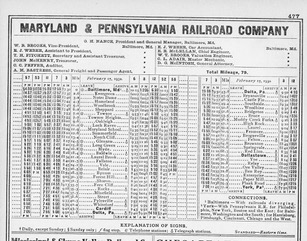
The Evergreen Station seen on the timetable was on Cold Spring Lane
Last Passenger Journey
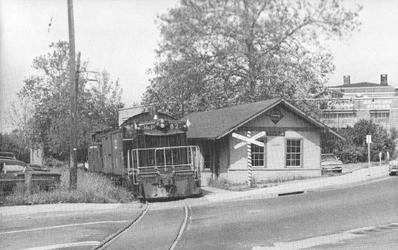
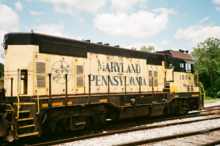
Following the end of World War II, the Ma and Pa acquired four diesel locomotives for more economical operations, but traffic declined significantly. When the Ma and Pa’s mail contract was cancelled by the U.S. postal service, the railroad discontinued all passenger service on August 31, 1954. One person on the last passenger train recalled that many riders came from as far away as Boston, Massachusetts, and Washington, D.C., to participate in the historic event, along with members of the National Railway Historical Society.[8] The picturesque line’s last steam engine dropped its fire for the final time on November 29, 1956.
Pennsylvania operations
The lack of traffic on the railroad’s 44-mile Baltimore–Whiteford Maryland Division in the 1950s was particularly acute. One of the last major shipments to occur was Indiana limestone for the construction of Baltimore’s Cathedral of Mary Our Queen in 1956. The Baltimore–Whiteford segment in Maryland was finally abandoned altogether on June 11, 1958, leaving only the stone abutments where the tracks crossed York Road in Towson on a steel girder bridge. A local group of history buffs placed a bronze plaque on the west abutment in 1999, commemorating the departed railroad’s place in Towson history.
In the 1960s, the Ma and Pa Railroad continued to solicit business along its line for its remaining 34.8-mile (56.0 km) Whiteford–York segment, almost entirely in Pennsylvania. In 1964, it added a siding 905 feet long near Red Lion to serve a new cigar box factory.[10]In 1971, the Maryland and Pennsylvania Railroad was acquired by Emons Industries.
Primarily hauling slate from a quarry at Delta, and furniture from a factory in Red Lion, the Ma and Pa’s Pennsylvania Division continued in operation until June 14, 1978, when the line was further reduced to the 9-mile York–Red Lion section. The Red Lion freight station was closed on November 1, 1980; when the Pennsylvania town’s furniture manufacturer shuttered its doors in 1984, the Red Lion section of the railroad was also abandoned.
Currently
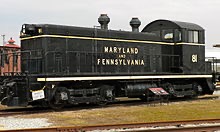
The Emons-controlled Maryland and Pennsylvania Railroad acquired 19 miles of a former PRR branch line between York and Hanover, Pennsylvania in the 1980s. In December 1999, Emons merged its M&P subsidiary with another area short-line, Yorkrail, forming the York Railway. In 2002, Genesee and Wyoming gained control of the 42-mile (68 km) York Railway, including the former M&P Railroad trackage between York–Hanover. The York Railway currently serves 40 online rail customers and connects with the Norfolk Southern and CSX railroads.
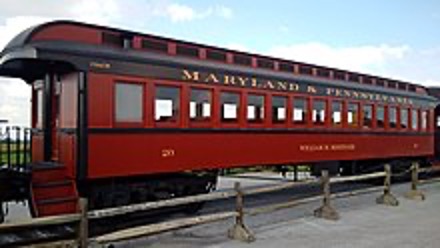
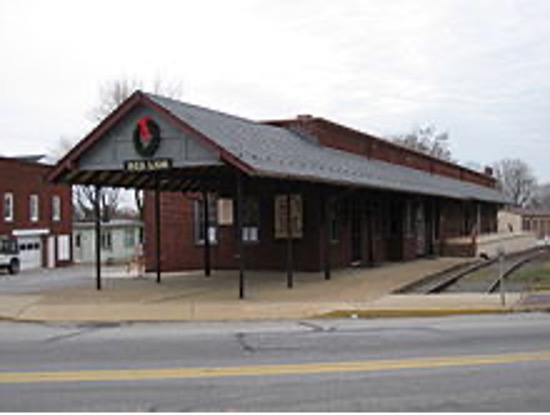
A small, 3-mile fragment of the original railroad line still exists between Laurel and Muddy Creek Forks in York County, Pennsylvania, maintained by the Maryland and Pennsylvania Railroad Preservation Society. Founded by enthusiasts and former employees in 1986, the group has restored the Muddy Creek Forks station and also has a small collection of rolling stock there.[5] The preserved Red Lion, Pennsylvania, station is now a museum operated by the Red Lion Area Historical Society.[6] Other remaining structures along the old right-of-way include scattered bridge abutments and some station buildings, such as the former combination railroad station and general store in the village of Hydes, Maryland.
Looking for a fun day trip?
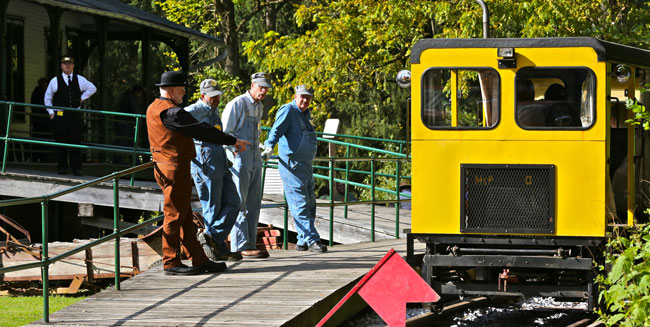
The Ma and Pa Railroad Preservation Society operates the authentic circa-1900’s historic Ma & Pa Railroad Heritage Village at Muddy Creek Forks in York County, Pennsylvania. The train, store, and buildings are open during its operating season (June – Sept). The grounds are open for self-guided tours year-round. You can tour the many exhibits of the Maryland and Pennsylvania Railroad along with visiting the train station, post office, telephone exchange, authentic cash register, and grand staircase. In addition, there are train rides on our maintenance train. Picnic tables are available along with a large wrap-around porch to just sit and enjoy the scenery. Nearby is the Wallace-Cross Mill, one of the few water-powered grist mills remaining in York County. Along with the mill, the famous Maple Lawn Farms Orchard and Corn Maze Park are nearby. Just down the road are many wonderful eating establishments.
Check them out at https://maandparailroad.com/

Baltimore Sun article about the Ma Pa Railroad
Baltimore’s Ma and Pa Railroad may be gone, it remains forever on time
By Jacques Kelly | jkelly@baltsun.com
PUBLISHED: March 29, 2025 at 8:30 AM EDT
Baltimore reveres its railroad traditions, yet its smallest lines have captured an outsized emotional attachment.
The old Maryland and Pennsylvania Railroad, called the Ma & Pa or just the M&P, physically disappeared here in 1958.
It’s a case where time only burnished the affection for the train line that made so many friends. Today, people who were not alive when its smoke-spewing coal-fired trains passed through Remington, Wyman Park, Roland Park, Woodbrook, Armagh Village, Rodgers Forge, Towson and Glen Arm, Fallston and Bel Air on to York, Pennsylvania.
Yet, the Tuscany-Canterbury neighborhood webpage features an illustrated history of the line.
The engines, rails, and bridges may be gone, but Harford County officials announced the progress on the Ma & Pa Heritage Trail where workers placed a prefabricated bridge near the Bel Air Bypass, connecting Bel Air and Forest Hill former track sections. The Baltimore Streetcar Museum operates on its former Falls Road headquarters and announced plans to refurbish the line’s roundhouse.
Why the reverence for a commercial enterprise that quit Baltimore and Maryland in 1958? The Ma & Pa was different. It was the line you could get up close and personal with.
As a schoolboy, I saw its locomotives cross what was the Belvedere Avenue, now Northern Parkway, along what is now the Stony Run Trail, the recreational path that replaced the rails.
Stan Heuisler, a former Baltimore Magazine editor and one of the line’s fans, recalled a Saturday ritual for Roland Park boys.
“We would get together — Chick Lord, Bo Grimes, Chris Scott, Emanual Canevaro and I — and ride our bikes up Roland Avenue to … a Melrose Avenue bridge over Ma & Pa tracks. We would get on the bridge when a northbound steam engine was coming, close our eyes and mouth, and let the smoke and ashes and cinders and steam EXPLODE all over us as the train went under the bridge.
“Our parents would bawl us out when we got home. (“You did it AGAIN!”) Sometimes, there were little holes burned in our clothing. We had to shower, and if the weather was warm, my Dad would hose us down.”
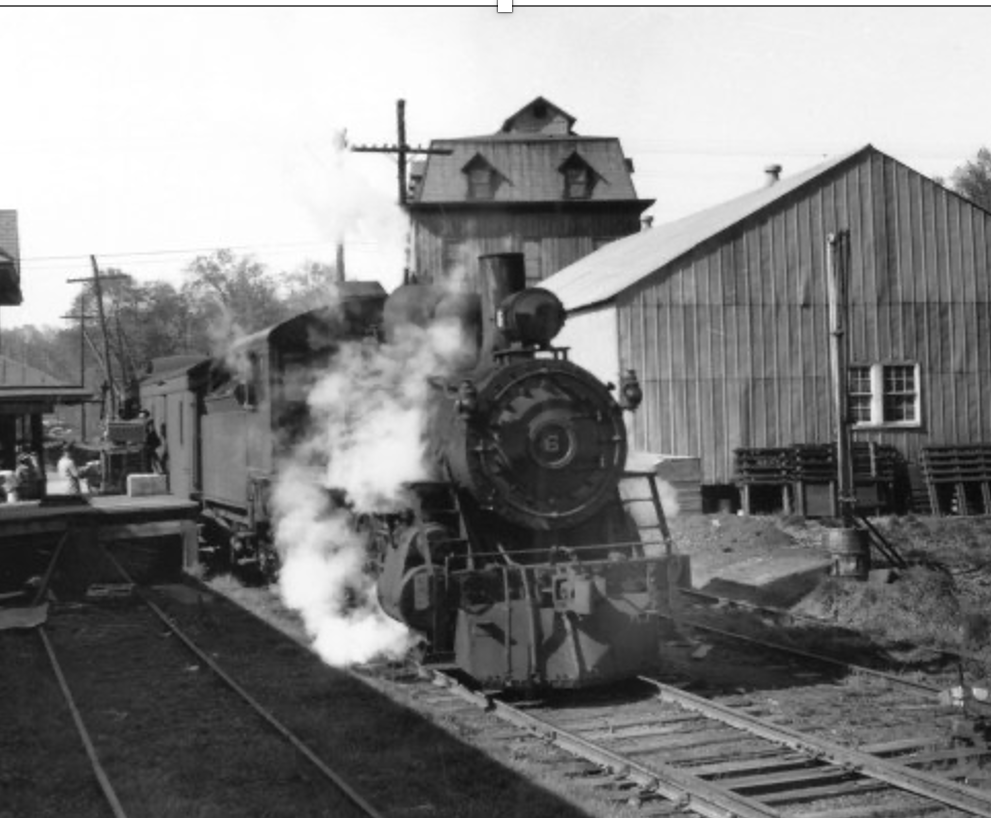
Maryland & Pennsylvania Railroad steam engine #6 stopped outside a Bel Air train station in 1946. (Charles T. Mahan, Jr./file)
The Ma & Pa never seemed to throw anything away, and by the 1950s, it was a kind of rolling museum. My father would drive me to the Falls Road roundhouse where the old steam engines were arrayed in their stalls in contrast to the fast and sleek new trains at the nearby Pennsylvania and Mount Royal stations.
The old Ma & Pa plant on Falls Road became a natural, if unpromoted, family destination.
“It was the 50s ’cause I was a little kid, but with my brother Phil, we would ride down on weekend mornings early (often Sundays before getting dressed for 10:30 Mass because dad went to work most Saturday mornings,” Heuisler recalled. “My dad would have a six-pack of beer in a kind of tin wire holder, and we would park the Plymouth on Falls Road by the tracks.
“The small switcher engine, No. 29, would pull up and stop, and we would climb up the ladder steps and into the cab and take a steam engine ride and I got to pull the bell cord (not the steam whistle because that was a signal) while the engineer and fireman chugged the beer.
“I don’t know how my father had gotten to know the switcher yard engine crew, but we did it quite a few times. We never went onto the roundhouse turntable, but we were chuffed by it and saw how it worked. It was a busy working rail yard, and above and behind the decrepit station house was a coal shuttle in the hillside. We took both the guys on the engine, a ham and turkey for Christmas. Smalltimore.”
For some reason, on August 31, 1954, my father and I happened to be there on Falls Road. We had just been chased out of our Dewey Beach vacation home by Hurricane Carol.
Falls Road was unexpectedly filled with extra rail passenger cars, and people seemed to be all over the place. The commotion? It was the Ma & Pa’s final passenger run, and its legion of fans tuned out for the occasion. The line’s freight operation struggled for another four years (the line hauled the stone to build the Cathedral of Mary Our Queen), and then they pulled up the tracks in Maryland.
We lost the steam engines to metal scrappers, and thankfully, a few of its antique passenger cars and diesel equipment went to museums. There’s a preserved Ma & Pa Heritage Village at Muddy Creek Forks in York County, Pennsylvania, as well as a historical society of fans who just won’t let go.